Dr. Giles Course

A collection of materials and practice problems for Dr. Giles’ Chemistry and Biochemistry students to explore concepts.
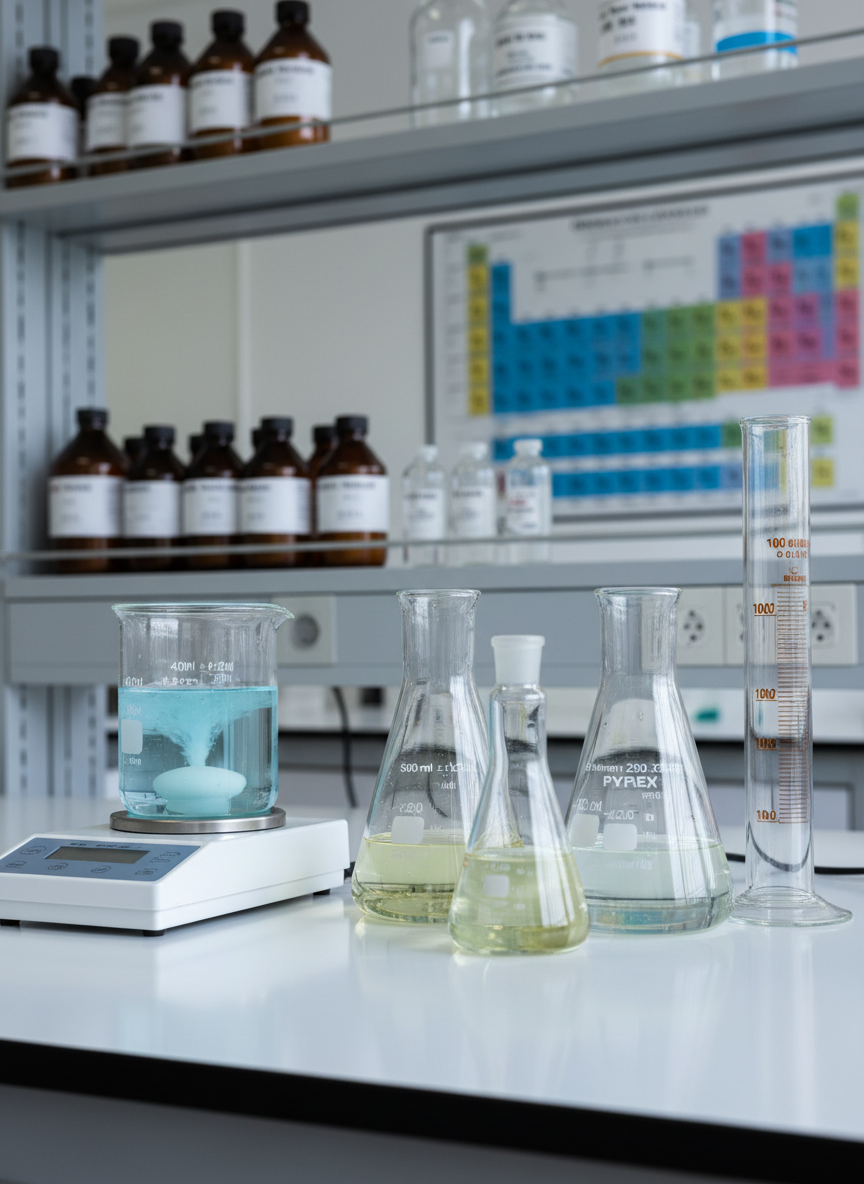
A close-up, photographic view of a clean laboratory bench in an academic chemistry lab, lined with colorless and softly tinted glassware: volumetric flasks, Erlenmeyer flasks, and graduated cylinders, each marked with precise calibration lines and clear labels. A magnetic stir plate holds a beaker of pale blue solution mid-stir, with tiny bubbles rising. In the background, shelves with neatly arranged reagent bottles and a prominently displayed periodic table are softly out of focus. Cool, even overhead lab lighting reflects off the glass surfaces, creating crisp highlights and subtle reflections on the polished benchtop. The composition uses the rule of thirds, capturing a professional, meticulous atmosphere ideal for illustrating course resources in chemistry and biochemistry education, with sharp, photographic realism throughout the main glassware.
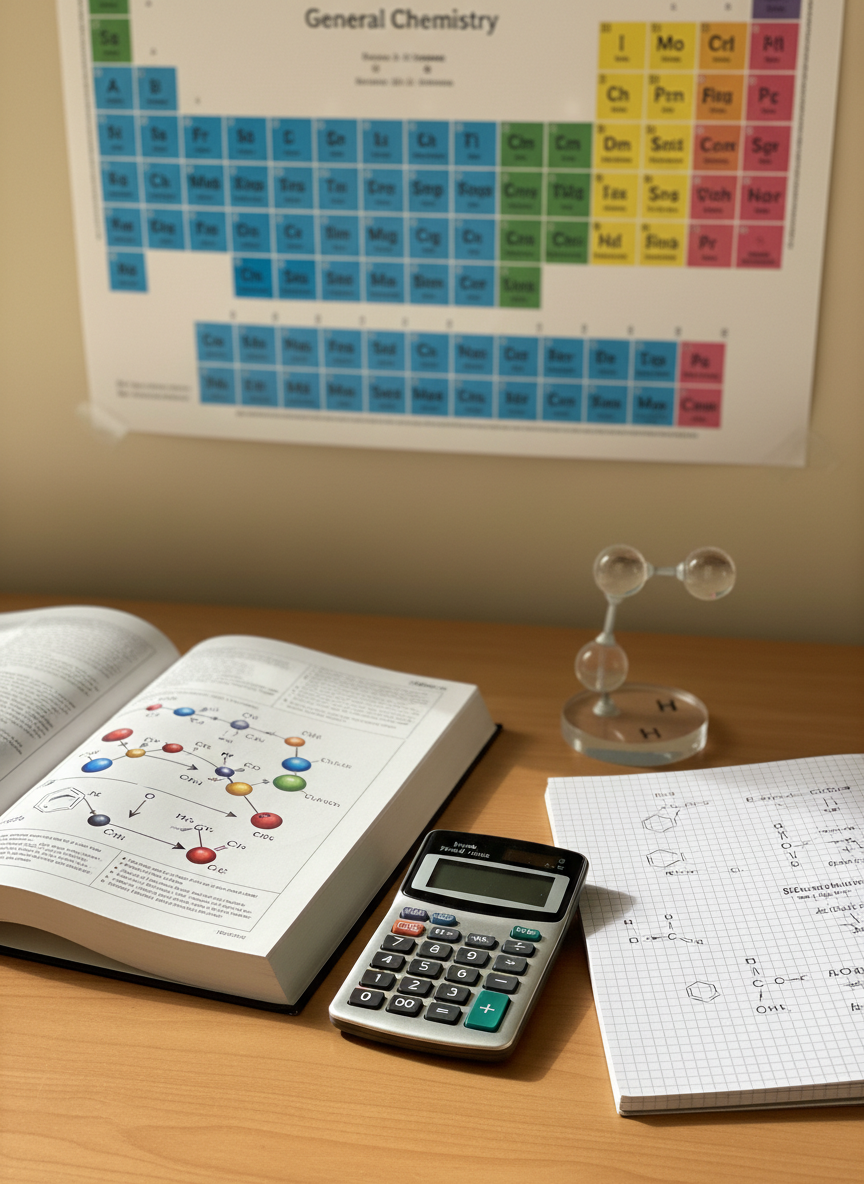
A neat chemistry study desk arranged for an undergraduate course, featuring an open general chemistry textbook with colorful molecular diagrams, a ruled notebook filled with neatly written reaction mechanisms, and a sleek silver scientific calculator. Beside them, a transparent acrylic model of a water molecule and a labeled periodic table poster in the background sit against a soft, neutral wall. Gentle daylight from an unseen window to the left creates soft, natural highlights on the glossy paper and calculator keys, casting subtle shadows across the wooden desktop. Photographic realism, shot at eye level with a shallow depth of field so the foreground materials are in crisp focus while the background blurs slightly, creating a calm, organized, professional academic atmosphere suitable for a course resources homepage.

Topic-Based Problem Sets

This resource hub groups chemistry and biochemistry problems by topic, offering clear instructions and labeled difficulty to streamline study sessions.

Feedback Form

A feedback form (forms/feedback) lets students request more problems on challenging topics, informing future problem set creation.

A feedback form (forms/feedback) lets students request more problems on challenging topics, informing future problem set creation.

← Back

Thank you for your response. ✨

A close-up, photographic view of a clean laboratory bench in an academic chemistry lab, lined with colorless and softly tinted glassware: volumetric flasks, Erlenmeyer flasks, and graduated cylinders, each marked with precise calibration lines and clear labels. A magnetic stir plate holds a beaker of pale blue solution mid-stir, with tiny bubbles rising. In the background, shelves with neatly arranged reagent bottles and a prominently displayed periodic table are softly out of focus. Cool, even overhead lab lighting reflects off the glass surfaces, creating crisp highlights and subtle reflections on the polished benchtop. The composition uses the rule of thirds, capturing a professional, meticulous atmosphere ideal for illustrating course resources in chemistry and biochemistry education, with sharp, photographic realism throughout the main glassware.